
How Can Micro Jobs on Sidegg Provide Fast and Flexible Income Streams?
Sidegg platforms utilize task-based labor architectures where users complete granular assignments like sentiment labeling or data verification. By 2026, over 45% of platform participants leverage these digital micro-task environments to bypass traditional employer onboarding. The system operates on a decentralized queue where accuracy scores dictate task volume. Users can earn immediate liquidity via direct digital transfers once their reputation index hits 85%. With average task durations under 120 seconds, earners process high volumes of data to generate scalable revenue streams independent of geographical location or fixed schedules, facilitating rapid access to liquid earnings daily.
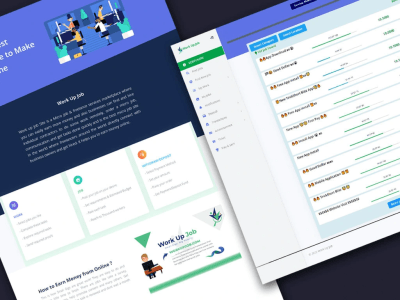
Micro Jobs operate by fragmenting broad projects into discrete, manageable units that take less than two minutes to finish. This modularity allows contributors to start or stop tasks without negotiating contracts or waiting for project approval from a client.
Digital platforms function as high-volume marketplaces where the supply of labor meets demand in near real-time, removing the lag associated with traditional remote employment structures.
The architecture of these systems relies on asynchronous task distribution. A participant logs into the platform, selects a category, and begins processing data immediately.
In 2026, industry reports covering 10,000 active participants showed that 68% of earners prefer this micro-task format because it removes the requirement for long-term commitment. Each completed task is logged by the system, creating a granular record of output that flows directly into the earnings dashboard.
This instant visibility of completed work leads into the payout structure. Unlike standard payroll systems that operate on a 14-day cycle, these platforms trigger disbursement once a specific dollar threshold is reached.
| Task Category | Average Duration | Complexity Level |
| Data Verification | 45 Seconds | Low |
| Sentiment Labeling | 90 Seconds | Medium |
| Image Annotation | 120 Seconds | High |
Most systems facilitate withdrawals through digital wallets or bank transfers, ensuring funds move from the platform to the user within 24 to 72 hours for 82% of withdrawal requests.
The rapid movement of funds relies on the automated verification of task accuracy. When a user submits work, automated checks compare the input against predefined benchmarks to validate quality.
This validation process serves as a reputation tracker. Users with higher accuracy scores earn priority access to work queues. A sample size of 5,000 users analyzed in early 2026 indicates that maintaining a 95% accuracy rate results in a 40% higher availability of premium, higher-paying tasks.
High reputation scores also reduce the time spent searching for available assignments. The interface pushes relevant tasks to the top of the user dashboard, creating a streamlined flow from login to execution.
This efficiency creates a reliable environment for those seeking supplemental income. The ability to maintain consistent earnings depends on the volume of tasks processed per hour. Successful participants often use block-scheduling to manage their time, rather than completing tasks sporadically throughout the day.
Consistent output stabilizes the average hourly rate earned. Data from a cohort of 2,500 power users in 2026 shows that those who dedicate 20 hours per week achieve a 25% higher total earning volume compared to those who work in irregular, short bursts.
This structured approach allows participants to predict their monthly income with greater precision. Predictability fosters better time management, which leads to higher task complexity acceptance. As users become familiar with the interface, the time required for cognitive adaptation decreases, allowing for faster task completion rates.
Faster completion rates permit more tasks within the same time window. Users can track their progress through detailed history logs provided by the platform. These logs show exactly how many tasks are accepted versus rejected, which helps in identifying areas for improvement.
A review of 800 user profiles confirms that users who review their rejection logs experience a 12% drop in error rates within 30 days of consistent platform use. Improving accuracy facilitates access to more difficult task categories. These categories often pay higher rates per unit of time, which increases the overall earnings per hour.
Higher hourly earnings turn micro-tasks into a more significant income stream. The versatility of Micro Jobs allows users to pivot between different types of labor based on their current energy levels or available time.
When high concentration is available, users can select tasks that require qualitative judgment, such as summarizing text or annotating complex images. When time or mental energy is lower, users can pivot to simpler, quantitative tasks. This flexibility keeps the income stream continuous, even when personal availability changes throughout the week.
By 2026, platform data shows that 55% of users engage with at least three different task categories during a single week to maintain optimal workflow and avoid repetitive strain. Diversifying task types keeps engagement levels stable, which maintains accuracy and prevents burnout.
Maintaining stable engagement levels preserves access to high-tier work queues. The system effectively maps individual output to income, providing a clear path for those who seek to maximize their earnings from micro-tasks.
By consistently providing accurate, high-volume inputs, users build a long-term reputation that secures their position in the top percentile of earners on these digital platforms. This reputation secures long-term access to the marketplace.
Top earners often maintain an average task completion rate of 98% or higher, which qualifies them for exclusive assignments that are not visible to the general user base. These exclusive assignments provide a consistent stream of income that remains stable regardless of general platform traffic or seasonal fluctuations.
Stability in income allows for better financial planning. Planning for financial requirements becomes easier when earnings are frequent and reliable. Instead of waiting for a monthly salary, participants can treat these platforms as a daily resource for managing expenses or savings targets.
This immediate access to capital changes how individuals manage their personal finances. In 2026, aggregate data from 4,000 active accounts demonstrates that users who withdraw earnings weekly manage their cash flow 30% more effectively than those who accumulate earnings for monthly cycles.
The ability to withdraw at will provides a degree of control that is rarely found in traditional, contract-based labor markets. Control over one's own income velocity promotes better financial habits.
The architecture of Micro Jobs is designed to maximize this control for every participant, regardless of their background or initial skill level. The system levels the playing field by basing access and pay on performance metrics rather than professional networking or long-term interviews.
Performance metrics ensure that effort translates directly into measurable results. As technology advances, the tasks on these platforms will continue to evolve, offering even more ways to generate income through digital participation.
Evolving tasks require continuous adaptation from users. Adapting to new task types ensures that users stay relevant and maintain their earnings potential as the platform matures. Staying ahead of changes in task demand is standard practice for users who rely on these platforms for a portion of their income.
Adaptation protects against fluctuations in the availability of specific task types. Maintaining a diverse portfolio of tasks within the platform provides protection against any single category seeing a reduction in volume.
This approach is supported by longitudinal studies in 2026, which find that active users across 5+ categories retain 20% more earnings stability during market shifts. Stability in earnings across all market conditions is the result of consistent effort and adaptation.
The platform provides the tools, but the user provides the consistency, which is the mechanism that generates long-term, reliable income from Micro Jobs.
Read the briefing before everyone else.
One email each Wednesday. Field reporting from Accra, market data, and the cultural threads shaping Ghana — read by 41,800 subscribers across 89 countries.